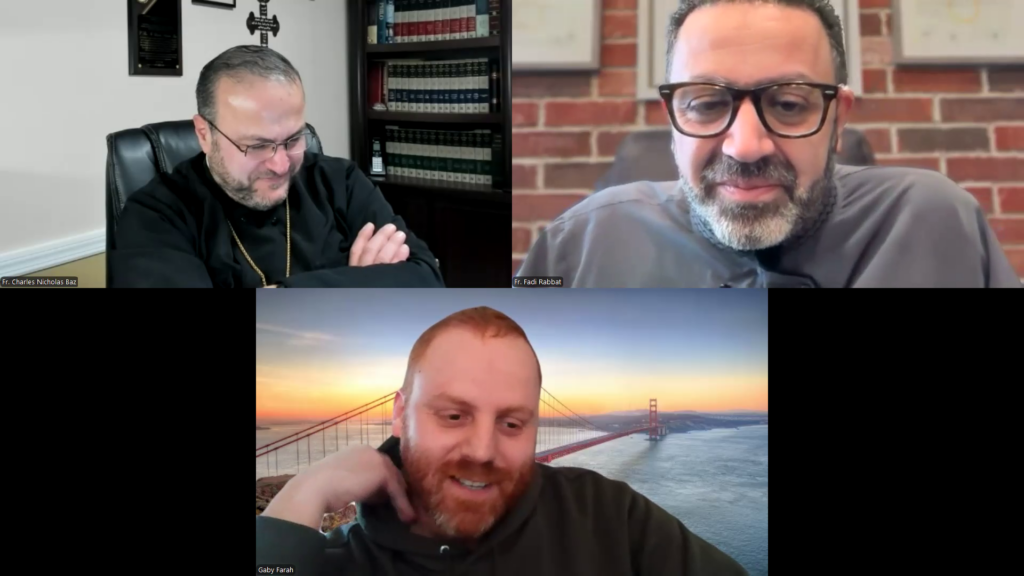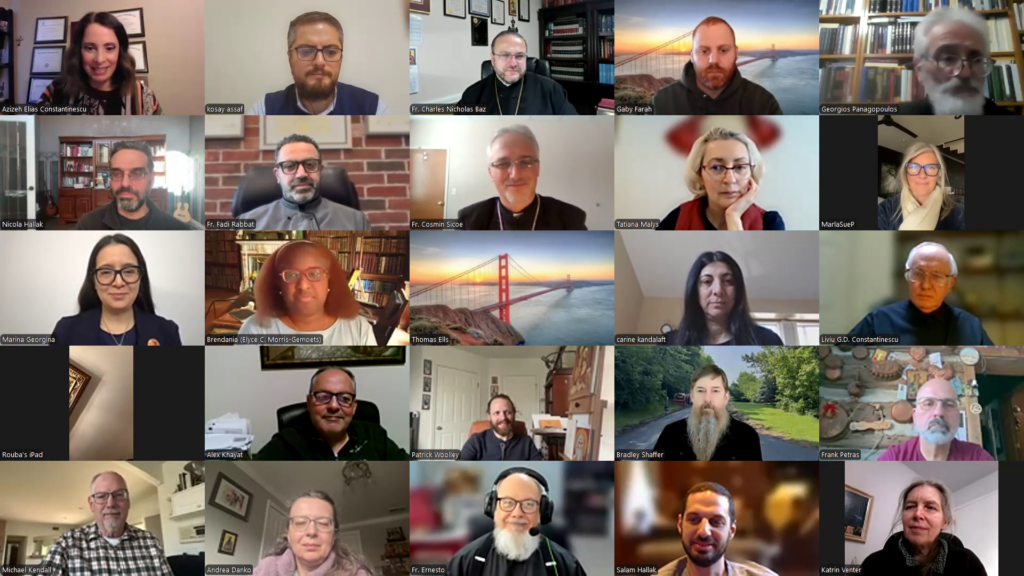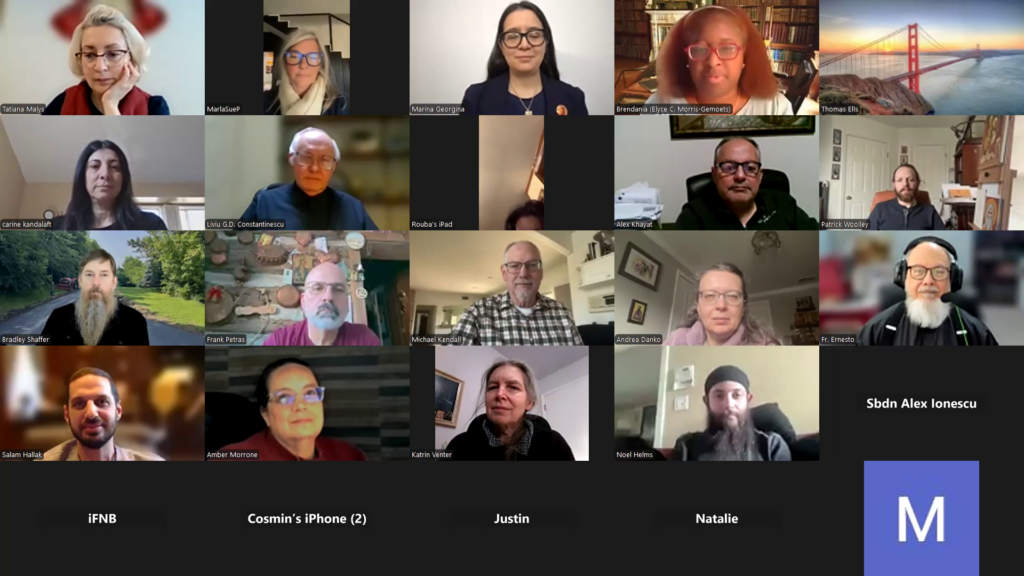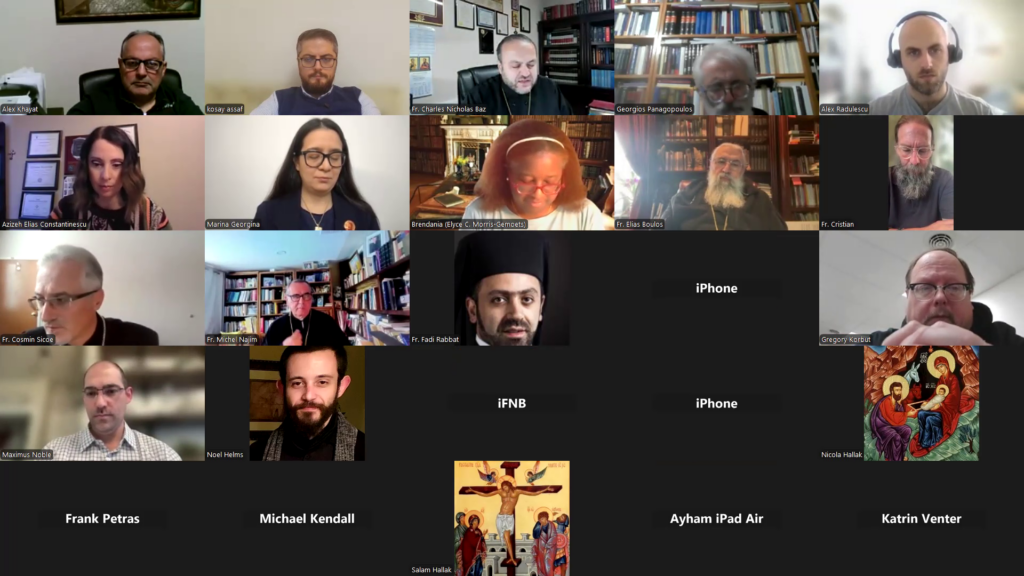
2026 Winter Symposium
The Most Holy Theotokos in the Teachings of the Church Fathers

Saturday, January 24, 2026 | 12:00 PM EST | Via Zoom
On Saturday, January 24, 2026, the Orthodox Academic Society of the Antiochian House of Studies (AHOS) held its Winter Symposium via Zoom, gathering clergy, scholars, students, and faithful for a sustained theological reflection on The Most Holy Theotokos in the Teachings of the Church Fathers. The symposium sought to examine the place of the Theotokos within Orthodox theology as articulated by the patristic tradition, emphasizing the inseparable unity between Mariology and Christology in the life and doctrine of the Church.
Opening Session
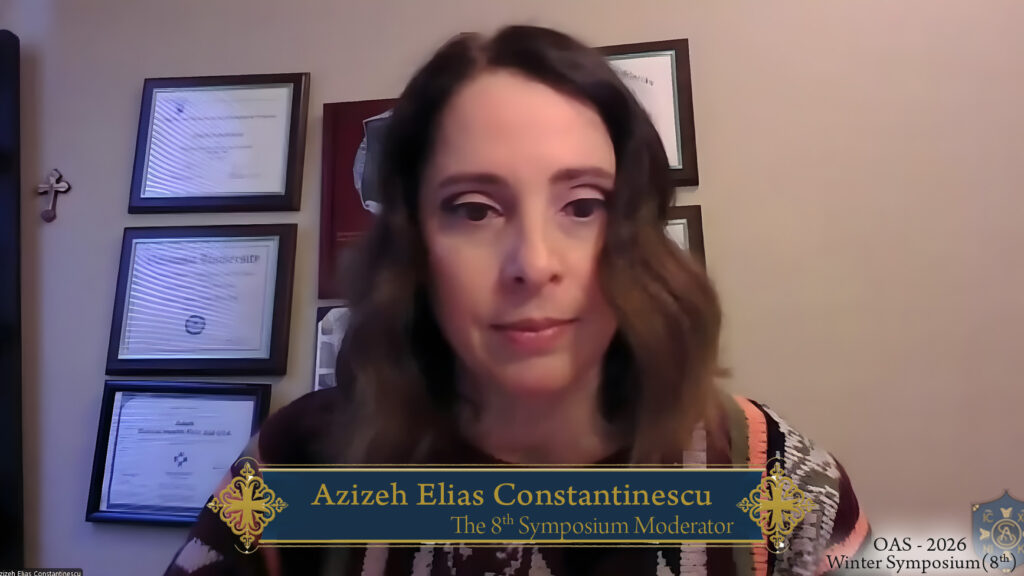
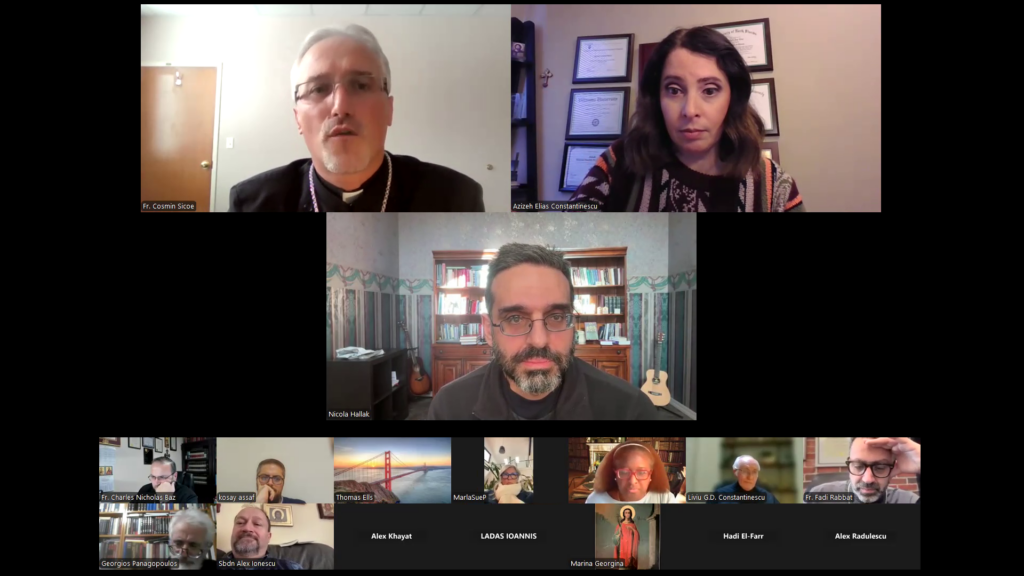
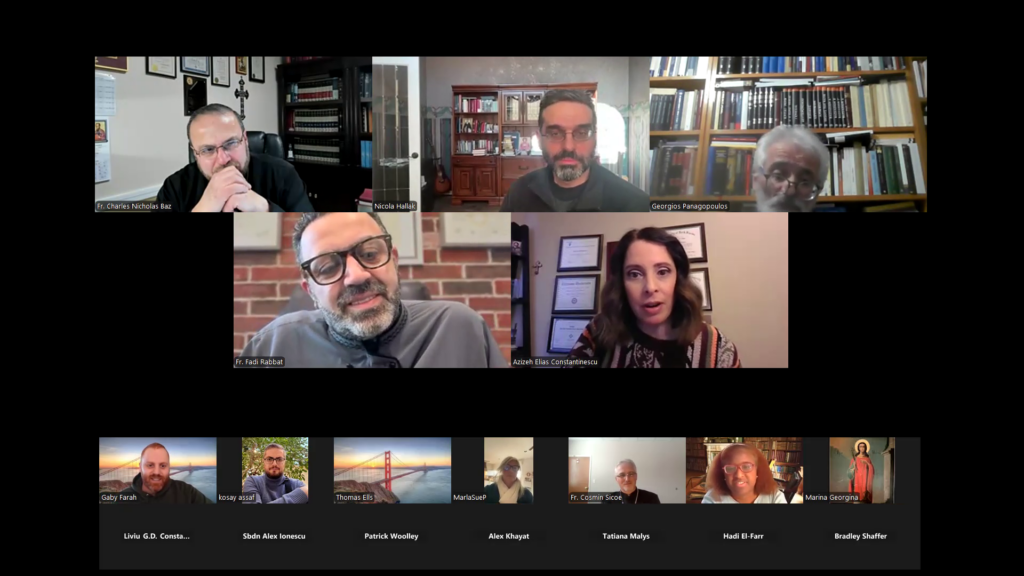
The symposium opened under the moderation of Azizeh Elias Constantinescu, who welcomed participants and introduced the theme and structure of the gathering. She emphasized that the symposium was intended not merely as an academic exercise, but as a theological encounter rooted in the worshipping and believing life of the Church, where doctrine, liturgy, and piety remain organically united.
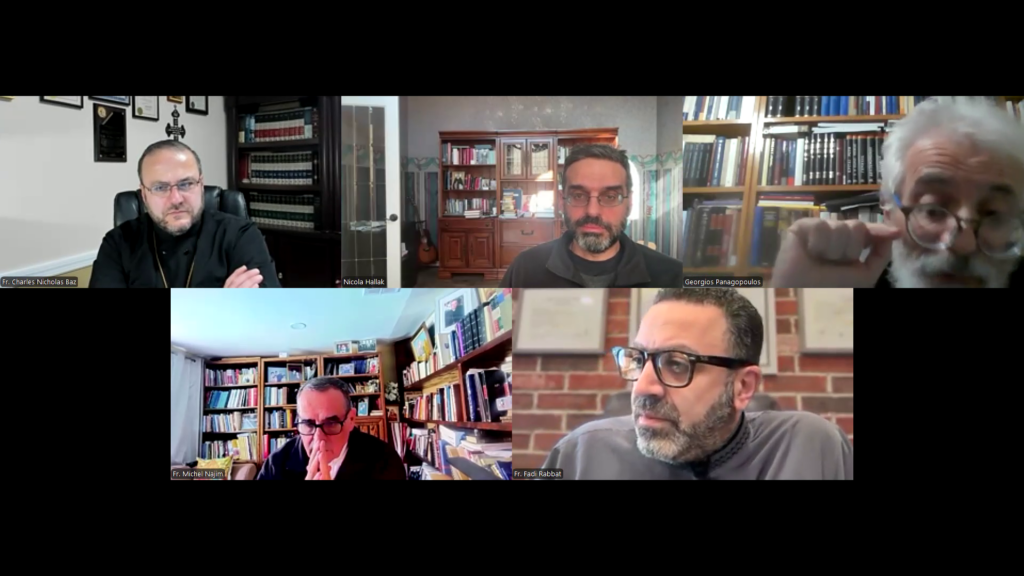
Following the opening prayer, introductory addresses were offered by V. Rev. Fr. Michel Najim, President of AHOS, and Rt. Rev. Fr. Fadi Rabbat, Dean of AHOS.
Introductory Address
V. Rev. Fr. Michel Najim – President, Antiochian House of Studies
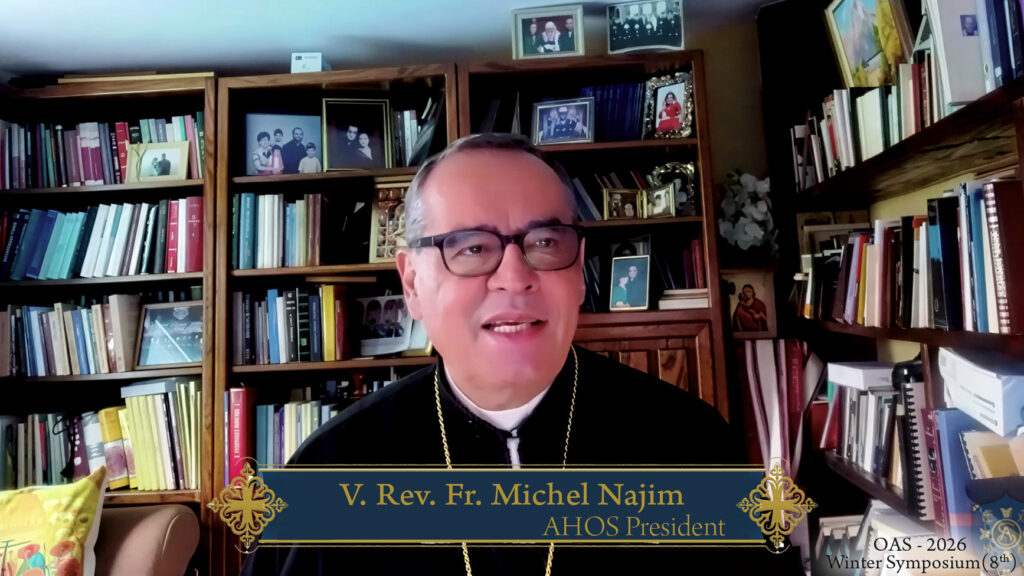
In his opening address, V. Rev. Fr. Michel Najim framed the symposium’s theme within both personal pastoral experience and the broader theological concerns of the Orthodox Church. Reflecting on his early pastoral ministry in North America, particularly among Evangelical Christians who had entered the Orthodox Church, Fr. Michel observed that the veneration of the Theotokos was consistently perceived as one of the most challenging aspects of Orthodox faith for converts. This difficulty, he explained, often arises from a theological framework that separates Christology from Mariology, thereby misunderstanding the Orthodox confession of the Incarnation.
Fr. Michel emphasized that the Church’s reverence for the Theotokos is never detached from Christ, but rather flows directly from the Church’s faith in the Word made flesh. The marginalization of the Theotokos in much of contemporary Western Christianity, he noted, carries significant implications for Christology, Eucharistic theology, and ecclesiology. To diminish her role is ultimately to weaken the Church’s confession that Christ truly assumed human nature and remains united to His Body, the Church.
Drawing extensively on St. John of Damascus, Fr. Michel highlighted the patristic teaching that the Body of Christ received in the Eucharist is the very Body assumed from the Theotokos. This unity affirms that the Incarnation is not a past event but an ongoing reality manifested in the sacramental life of the Church. Through this Eucharistic and ecclesial lens, the Theotokos emerges as central not only to Christology, but also to the believer’s participation in salvation and the journey toward theosis.
Fr. Michel concluded by situating the symposium within the wider theological landscape of the Orthodox world, noting that Marian theology continues to be a vital area of reflection and dialogue in contemporary Orthodox scholarship, as evidenced by international symposia and academic collaborations.
Introductory Address
Rt. Rev. Fr. Fadi Rabbat – Dean, Antiochian House of Studies
Rt. Rev. Fr. Fadi Rabbat followed with an address that further articulated the academic and ecclesial vision underlying the symposium. He emphasized that AHOS approaches theology as a discipline rooted in the lived experience of the Church, where doctrine is inseparable from worship, pastoral life, and spiritual formation. Theology, he noted, is not merely an academic pursuit, but an ecclesial vocation undertaken in service of truth and the life of the faithful.
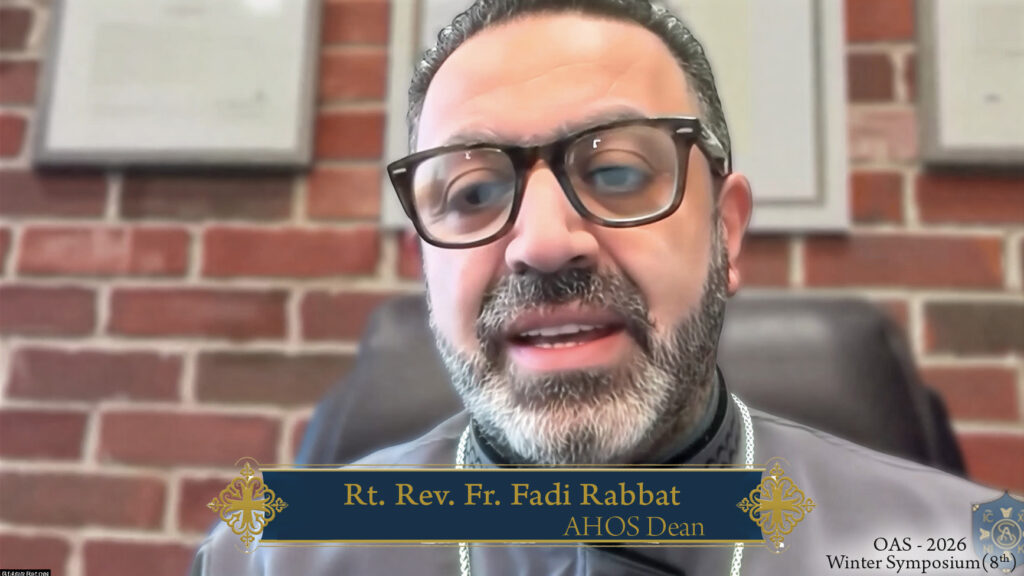
Fr. Fadi underscored that the theme of the Theotokos provides a privileged theological lens through which the mystery of the Incarnation may be contemplated. In the patristic tradition, he explained, the Theotokos stands at the intersection of divine initiative and human freedom. Her role reveals the synergy between God’s saving action and humanity’s response, a synergy that lies at the heart of Orthodox anthropology and soteriology.
He further stressed that the study of the Church Fathers requires both fidelity and discernment. The Fathers are not isolated authorities to be selectively quoted, but living witnesses to the Church’s Tradition, received and transmitted through conciliar consensus and liturgical life. Within this framework, Marian theology is neither exaggerated nor minimized, but carefully articulated so as to safeguard Christological truth and preserve the integrity of the Church’s faith.
Addressing contemporary theological challenges, Fr. Fadi noted that many misunderstandings regarding the Theotokos arise from fragmented theological approaches that separate Christology from ecclesiology and sacramental life. The patristic vision, by contrast, presents a unified theology in which the confession of the Theotokos protects the Church from doctrinal distortion and anchors devotion firmly within the worship of the Holy Trinity.
Fr. Fadi concluded by encouraging presenters and participants alike to engage the symposium’s discussions with academic rigor and ecclesial humility, affirming that the ultimate purpose of theological inquiry is the deepening of faith and fidelity to the mind of the Church.
Scholarly Presentations
1. Saint Gregory Palamas and Saint Maximus the Confessor on the Annunciation of the Theotokos
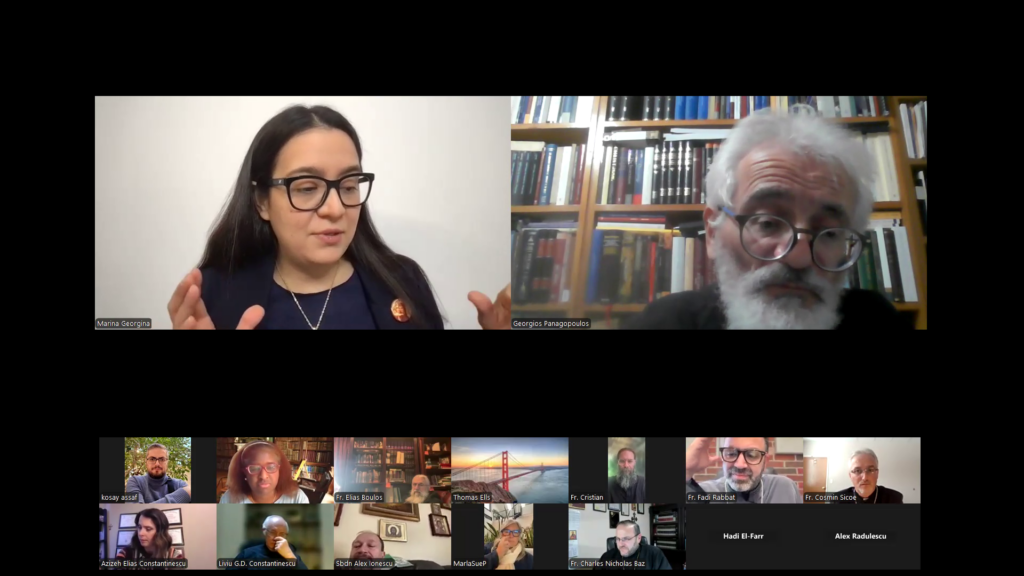
Marina Guevara-Trejo, Esq (Ph.D. Student, AHOS)
Marina Guevara-Trejo began by situating the Annunciation within the broader soteriological framework of the Orthodox Church, emphasizing that the Virgin’s assent to God’s will is the pivotal moment in salvation history. She noted that the Annunciation is not merely a historical event but a living paradigm of human participation in divine grace, showing how God’s initiative and human freedom converge in the work of salvation.
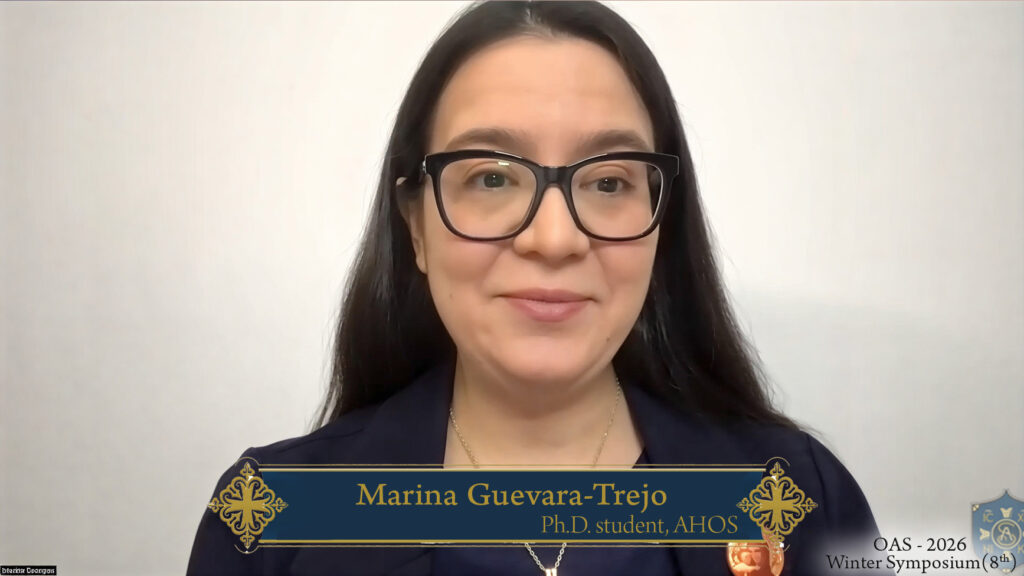
Drawing on St. Maximus the Confessor, Marina explained that the Virgin Mary’s consent (“fiat”) reverses Adam’s disobedience, exemplifying the Orthodox principle of synergy (συνέργεια) between God and humanity. Mary, as the first obedient human, restores the freedom and image of God marred by sin. Marina emphasized that Maximus perceives Mary not only as a passive vessel but as an active participant in God’s plan, through her intellect, will, and faith.
Turning to St. Gregory Palamas, she highlighted the Theotokos’ role as the prototype of theosis. Through her willingness and her union with the divine energies, she becomes the first human being to experience what Palamas calls divinization in anticipation. The Annunciation, Marina argued, reveals the Theotokos as both personal exemplar and ecclesial archetype: her faithful cooperation models for the Church how humanity is called to participate in God’s salvific work.
Marina concluded by asserting that the patristic vision of the Annunciation underscores the inseparability of Christology and Mariology, showing that any Orthodox understanding of Mary must always be framed within the mystery of the Incarnation. Her presentation also touched on the liturgical expressions of the Annunciation in hymnography, emphasizing that prayer and worship preserve the patristic insight that the Virgin’s assent is central to God’s economy of salvation.
2. The Teaching of the Church about the Theotokos before the Third Ecumenical Council, with a Focus on St. Ephraim the Syrian’s Hymns on the Nativity of Christ
Fr. Cosmin Sicoe (Ph.D. Student, AHOS)
Fr. Cosmin Sicoe explored how the early Church articulated its understanding of the Theotokos before the formal declaration at the Third Ecumenical Council (Ephesus, 431 AD). He stressed that Marian doctrine emerged naturally within liturgical, hymnic, and theological traditions, rather than as a product of abstract speculation.
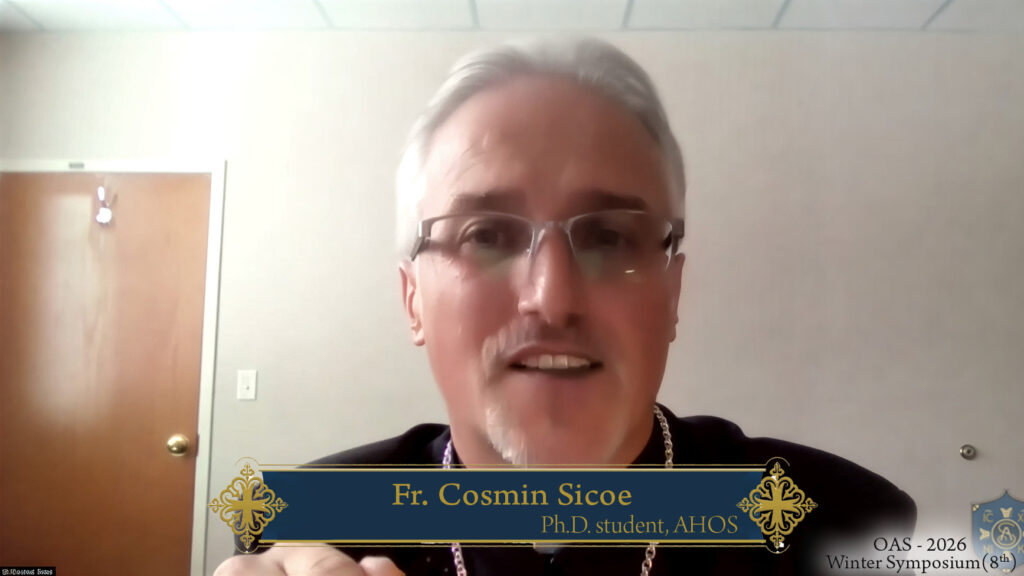
Focusing on St. Ephraim the Syrian, Fr. Cosmin highlighted the poet-theologian’s hymns on the Nativity of Christ. These compositions celebrate the paradox of the Incarnation: the Creator entering into His creation through a virgin, demonstrating the profound unity of divine and human action. He emphasized Ephraim’s frequent comparison of Eve and Mary, showing that Mary, as the New Eve, reverses the consequences of original disobedience. The hymns present her as a mediator of divine grace, yet always in the context of her Son’s salvific work.
Fr. Cosmin traced this Marian theology in pre-conciliar liturgical life, showing that the Church’s worship codified orthodox Christology and Mariology simultaneously. He noted that the Council of Ephesus confirmed what the Church already professed in hymnography and prayer: Mary as Theotokos is essential to preserving the truth of Christ’s divine and human natures.
Additionally, Fr. Cosmin addressed the pedagogical dimension: early hymnography functioned as theological instruction for the faithful, ensuring that doctrinal truths were internalized through prayer, chant, and reflection. He concluded that the patristic teaching prior to Ephesus demonstrates a seamless integration of Christology, Mariology, and ecclesial life, providing a model for contemporary Orthodox formation and devotional practice.
3. The Preeminence of Christology within Orthodox Mariology: The Vision of the Holy Fathers
V. Rev. Fr. Charles Nicholas Baz (Ph.D. Student and Faculty, AHOS)
Fr. Charles Nicholas Baz presented an extended, comprehensive treatment of Orthodox Mariology, emphasizing its Christocentric foundation. He framed his presentation around the writings of Lossky, Florovsky, Meyendorff, St. Cyril of Alexandria, St. John of Damascus, St. Nicholas Cabasilas, and St. John Maximovich.
Fr. Charles opened by discussing the liturgical and doctrinal significance of the title Theotokos, showing how the Fathers used it as a safeguard against heresies such as Nestorianism, which divided the human and divine natures of Christ. He underscored that every aspect of Orthodox Mariology—from the Annunciation to the Dormition—serves to illuminate Christ’s identity as fully God and fully man.
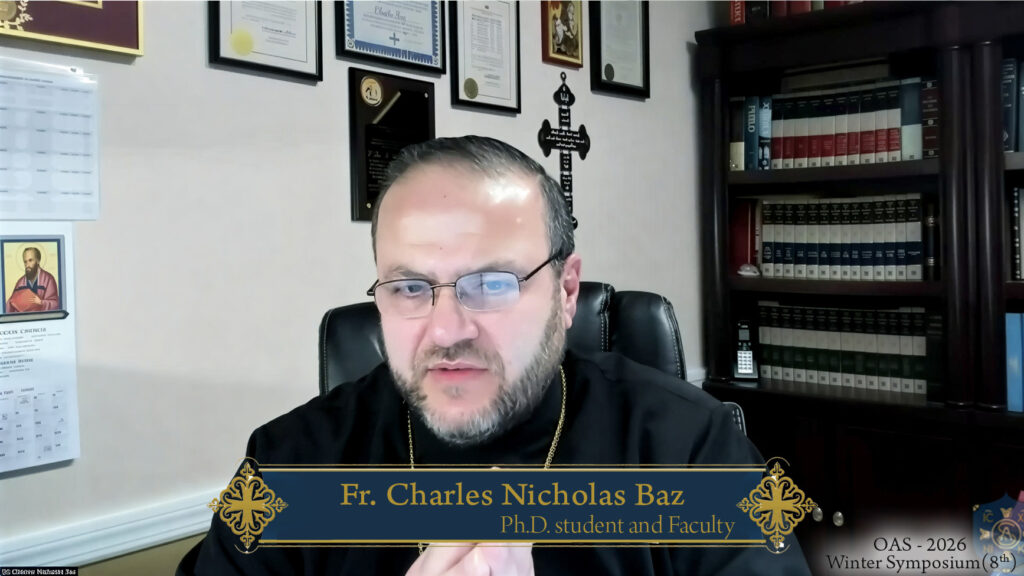
He critically examined Western doctrines such as the Immaculate Conception (1854) and the Assumption (1950), arguing that these innovations, though intended to honor Mary, inadvertently obscure her role as a free, active participant in God’s plan. Drawing on St. John Maximovich, he emphasized that the Theotokos’ holiness derives from her cooperation with grace, not from exemption from human experience. This synergy preserves the integrity of salvation history and maintains the normative pattern of Christ-centered holiness.
Fr. Charles further explored the Dormition of the Theotokos, drawing on St. John of Damascus and Brian Daley’s compilation of early homilies. He clarified that the Eastern tradition carefully distinguishes Mary’s falling asleep and bodily glorification from Christ’s resurrection, preserving Christological primacy while honoring her unique role. He explained that terms like κοίμησις, μετάθεσις, and μεταβασις signify a transformational participation in divine life rather than an ontological equality with the resurrection of Christ.
Finally, Fr. Charles highlighted the contemporary pastoral implications of Orthodox Mariology. He emphasized that veneration of the Theotokos leads believers toward Christ, reinforcing the liturgical and spiritual life of the Church. Orthodox devotion is thus simultaneously Christ-centered, ecclesial, and sacramental, affirming that the Theotokos, while honored above all saints, remains inseparably linked to the Incarnate Word and the ongoing work of salvation.
Conclusion
The symposium concluded with a closing prayer, returning scholarly reflection to its proper doxological context. Across all presentations, a unified theological vision emerged: the Theotokos is inseparable from Christ, from the Church, and from the mystery of salvation itself.
The 2026 Winter Symposium reaffirmed that Orthodox devotion to the Theotokos is neither excessive nor marginal, but a faithful expression of the Church’s confession of the Incarnate Word. Rooted in the witness of the Holy Fathers, nourished by liturgical life, and safeguarded by Christological precision, Marian theology remains a vital dimension of Orthodox faith and practice.